Type Approval in the ECTEL States: What It Costs Before Your Phones Clear

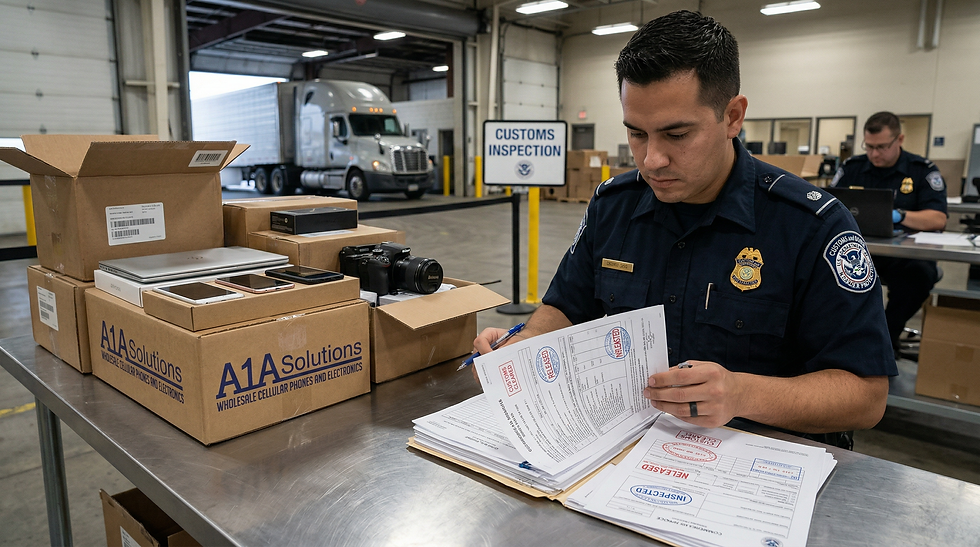
If you sell phones in Saint Lucia, Saint Vincent, Grenada, Dominica, or Saint Kitts and Nevis, there's a step sitting between your Miami pallet and your shelf that isn't customs. It's type approval, and it's handled by the telecom regulator, not the customs department. It has its own forms, its own fees, and its own clock. Most resellers find out about it the hard way, when a shipment is already sitting somewhere costing them money.
Here's how it actually works and what it costs.
The five ECTEL states, and why they share one rulebook
ECTEL is the Eastern Caribbean Telecommunications Authority. Five governments signed the founding treaty in St. George's, Grenada: Dominica, Grenada, Saint Kitts and Nevis, Saint Lucia, and Saint Vincent and the Grenadines.
ECTEL itself doesn't issue your certificate. Each member state has its own National Telecommunications Regulatory Commission, and that's the body you file with. The paperwork is harmonized across the group, though. Saint Lucia's type approval application still carries the header "ECTEL Approved Forms." Do this once in one member state and the second one will look familiar.
That matters if you supply more than one island. The documentation package you build for Saint Lucia is largely the same package Saint Vincent wants.
Cellular phones are on the type-approval list
Saint Vincent's NTRC publishes the list plainly. Cellular phones, cordless phones, GSM telephones, modems, radio transmitters and receivers, telephone instruments, and "any customer premises equipment to be attached to any part of a licensed telecommunications network" all require type approval before they can be installed, sold, or used.
Handsets aren't a gray area here. They're at the top of the list. A type approval, or certificate of conformity, is granted to a product that meets a minimum set of regulatory, technical, and safety requirements. No certificate, no legal sale.
An FCC certificate is the difference between EC$35 and EC$500
This is where the real money sits.
In Saint Lucia, if your device already holds type approval from a recognized agency or from another ECTEL state, the fee is thirty-five Eastern Caribbean dollars per application form. If the device has never been type approved anywhere, it's five hundred Eastern Caribbean dollars per item.
Saint Vincent works on the same principle with different numbers. The application fee is EC$100 for local applicants and EC$117 for overseas applicants, filed through the Spectrum E platform. If the Commission is satisfied the equipment is certified under FCC, ETSI, or Canadian regulations, it may be exempted from the local approval process altogether. If the Commission doesn't accept the foreign certificate, you're looking at a six-week lead time and a possible request for a sample unit.
The practical takeaway is simple. A phone built for the US market almost always carries an FCC ID. Ask for it before you buy. That one document is what keeps you in the EC$35 lane instead of the EC$500 one, and it's the difference between clearing in days and waiting six weeks.
Saint Vincent runs customs clearance as its own step
The SVG regulator operates a separate customs clearance portal, linked from both its provider and consumer menus. Type approval and customs clearance are two different transactions with two different queues.
Getting the certificate does not automatically release the box. Budget time for both, and don't assume your freight broker is covering the telecom side. Most brokers handle customs only. The telecom sign-off is on you.
What to ask your Miami supplier for before the pallet ships
Three things, and they should be in your inbox as PDFs before the freight moves.
The FCC ID and certification document for every model on the packing list. Not a spreadsheet cell with a number in it, the actual document.
Model numbers that match the certificate exactly. A regional variant with a different suffix can be treated as a separate device, which means a separate application and a separate fee.
An itemized commercial invoice with model and quantity on each line. Saint Lucia charges the higher type approval fee per item, not per shipment, so a mixed pallet with four uncertified models is four times the cost of one.
At A1A Solutions we ship FOB Miami on a thirty-unit minimum and send this documentation with the order instead of waiting for someone to ask for it. If you're building a mixed order for more than one island, our Caribbean wholesale page covers how we split and document multi-destination shipments, and the FAQ answers the usual questions about grading and payment terms.
The short version
Type approval in the OECS is cheap and fast when your devices already carry FCC certification. It's expensive and slow when they don't. That's the whole decision, and it gets made when you choose which models to buy, not when the container arrives.
Sourcing for the Eastern Caribbean and want to know which models already carry certification? Message us on WhatsApp at +1 305 321 2591, or register as a client to see current stock and pricing.